
1. Go Midweek If Possible
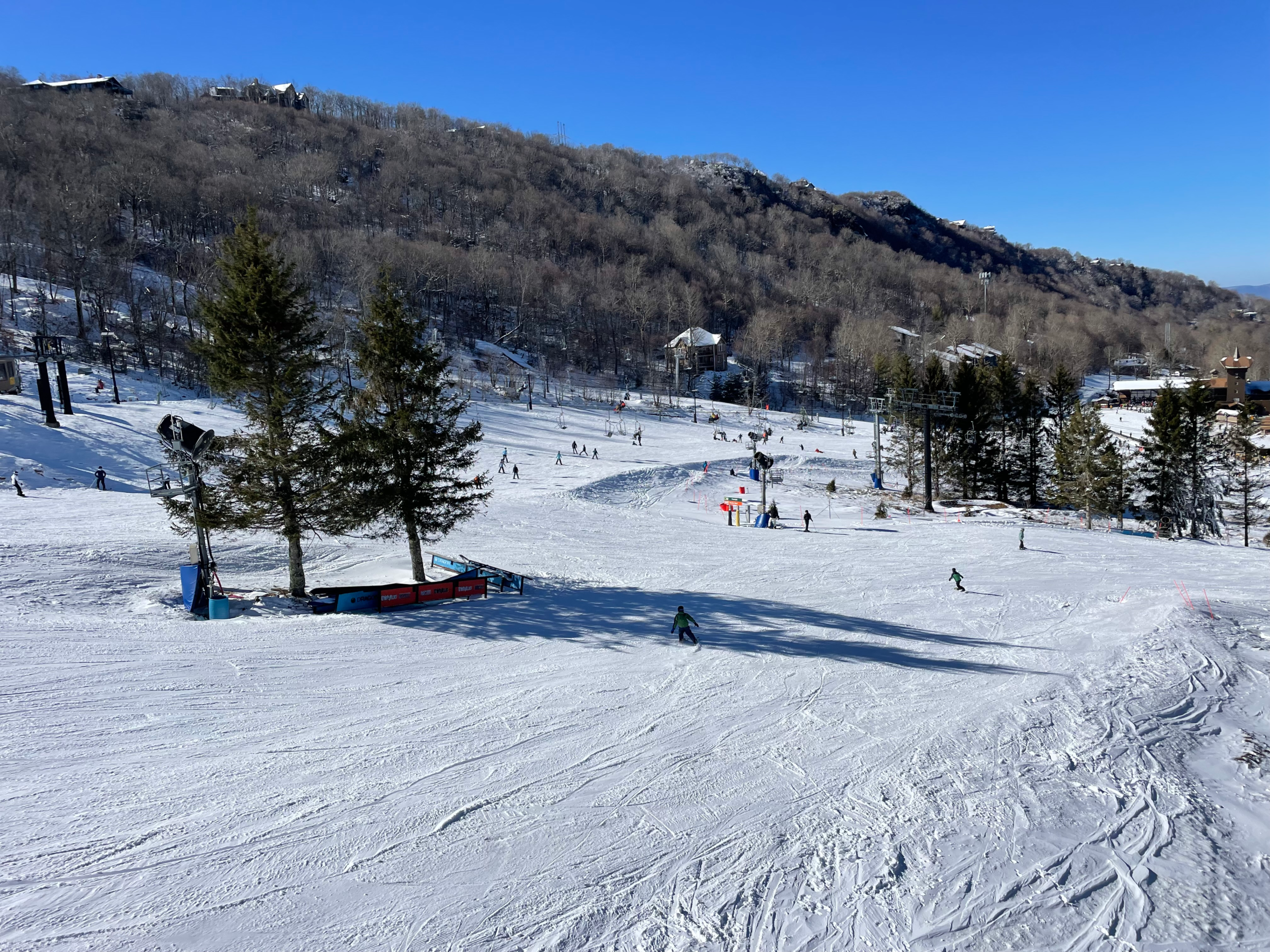
Going midweek is the best way to get the most bang for your buck. The conditions stay fresher, the lines are shorter, and everything is cheaper. Mountains in the Southeast already get a bad rap for their ice, and crowds do nothing but make it worse. When possible, consider taking a few days off, pulling the kids out of school, and making the trip up for some weekday skiing. Hey, even call in sick (we won’t tell).
2. Watch the Weather and Mountain Conditions
Skiing in the Appalachians is a different game. Out West or up North, you can book a trip weeks ahead and trust the mountain will be there. Here, you’ve got to watch the forecast like a hawk—because rain, wind, or a random 50-degree day can flip conditions fast. Look for cold temperatures overnight, snow, and low wind forecasts.
3. Get There Early
First chair means smoother snow, fewer people, and better visibility. Most resorts start the clock on lift tickets at opening, so getting there early maximizes your ski time and lets you enjoy the best conditions before crowds, ice, and scraped-off snow take over.
4. Stay Hydrated and Fueled
We know it may seem obvious, but staying hydrated and fueled up makes all the difference. Carrying snacks such as granola bars, trail mix, gummy candy, etc. can help hold you over until the next meal, and frequent water breaks keep you hydrated for the day. It’s important to remember that skiing is a sport; even mellow runs on groomers burn lots of calories, so replenish accordingly.
5. Be Ready Physically
Like we just mentioned, it’s important to remember that skiing is a sport. It takes coordination, muscular strength, flexibility, and endurance. Be honest with yourself about your physical capabilities, as the worst way to end a ski trip is a ride in a ski patrol stretcher. We recommend stretching right before skiing and doing some exercises like squat jumps at home to minimize injury risk.
6. Dress In Layers
The weather can change quickly on a ski day. You might start out in the cold at 25 degrees but be skiing in bright sunshine and 40 degrees by the afternoon. The key to staying comfortable is to stay warm and dry. Wear layers like thermals, long sleeves, sweaters, and hoodies so you can easily take things off or put them on as the temperature changes. It also helps to bring a small backpack made for skiing or the outdoors so you can carry extra layers, or you can rent a locker to store them at the lodge.
7. Be Wary of Road Conditions
Skiing around here (and, really, everywhere) often means driving up narrow, sometimes steep mountain roads. That’s just part of the deal. Resorts like Snowshoe and Beech Mountain have long, winding climbs that can get sketchy with snow or ice. In those conditions, 4WD or AWD helps a lot, and chains might be necessary. Always check the weather and road reports before heading out, and if things look questionable, it could be smarter to pick an easier-access resort like Massanutten, Sugar Mountain, or Ober Mountain in Gatlinburg.
8. Bring the Right Skis
Having the right equipment generally equates to having a better time out on the mountain. For this reason, we advise bringing skis that are on the narrower side underfoot (75-95 mm). Why? The lower more southern location and warmer weather results in a lot less powder than Western resorts get, and most skiing days will be on groomed, man-made snow. If there does happen to be a good snow, then by all means break out the 105’s and try and find some powder. However, for the most part hardpack-oriented skis do better on the sometimes icy conditions in the Southeast.
9. Choose the Right Resort
While most ski mountains will have something for beginners, intermediates, and experts, some are better than others in each category. Resorts like Bryce, Ober, or Appalachian are better for beginners, while others like Snowshoe, Beech, and Sugar offer more to the intermediate-advanced crowd. Check out our article about the best Southeast ski resorts for every type of skier to see recommendations to help you choose the right mountain.
10. Progress > Pride
If it’s your first time skiing, expect to fall. A lot. That’s completely normal. Taking lessons is easily the fastest way to learn, since trying to figure everything out on your own takes time, patience, and a lot of trial and error. If you decide to go the harder route and teach yourself (which I did too), at least watch a few beginner videos beforehand this one and this one to get a basic idea. Most importantly, don’t jump into advanced terrain right away trying to prove yourself. Avoid black runs and trees as a beginner. Start on the bunny slopes and green runs, move to easier blues when you’re ready, and build up from there. Trust me, the regret you feel standing at the top of a steep black run as a beginner is very real, and it’s much better to progress at your own pace than scare yourself on your first few ski trips.
Enjoy the mountains!
Leave a Reply